Next-Generation UAV Ground Control Systems: Coordinating Heterogeneous Unmanned Platforms
The future of unmanned systems is not a single platform type — it is a coordinated ecosystem of drones, ground vehicles, and robotic systems operating under unified command. This article examines the architectural requirements for next-generation ground control systems.
Beyond Single-Platform Control
The first generation of UAV ground control systems was designed for a simple purpose: control one drone. The operator sees what the drone sees, steers it with a joystick, and lands it when the battery runs low. This paradigm served adequately for commercial photography and basic reconnaissance.
Modern military and civil emergency operations demand something fundamentally different: heterogeneous unmanned system coordination — the ability to simultaneously command drones, unmanned ground vehicles (UGVs), robotic platforms, and other autonomous systems from a single terminal, with unified situational awareness and coordinated mission execution.
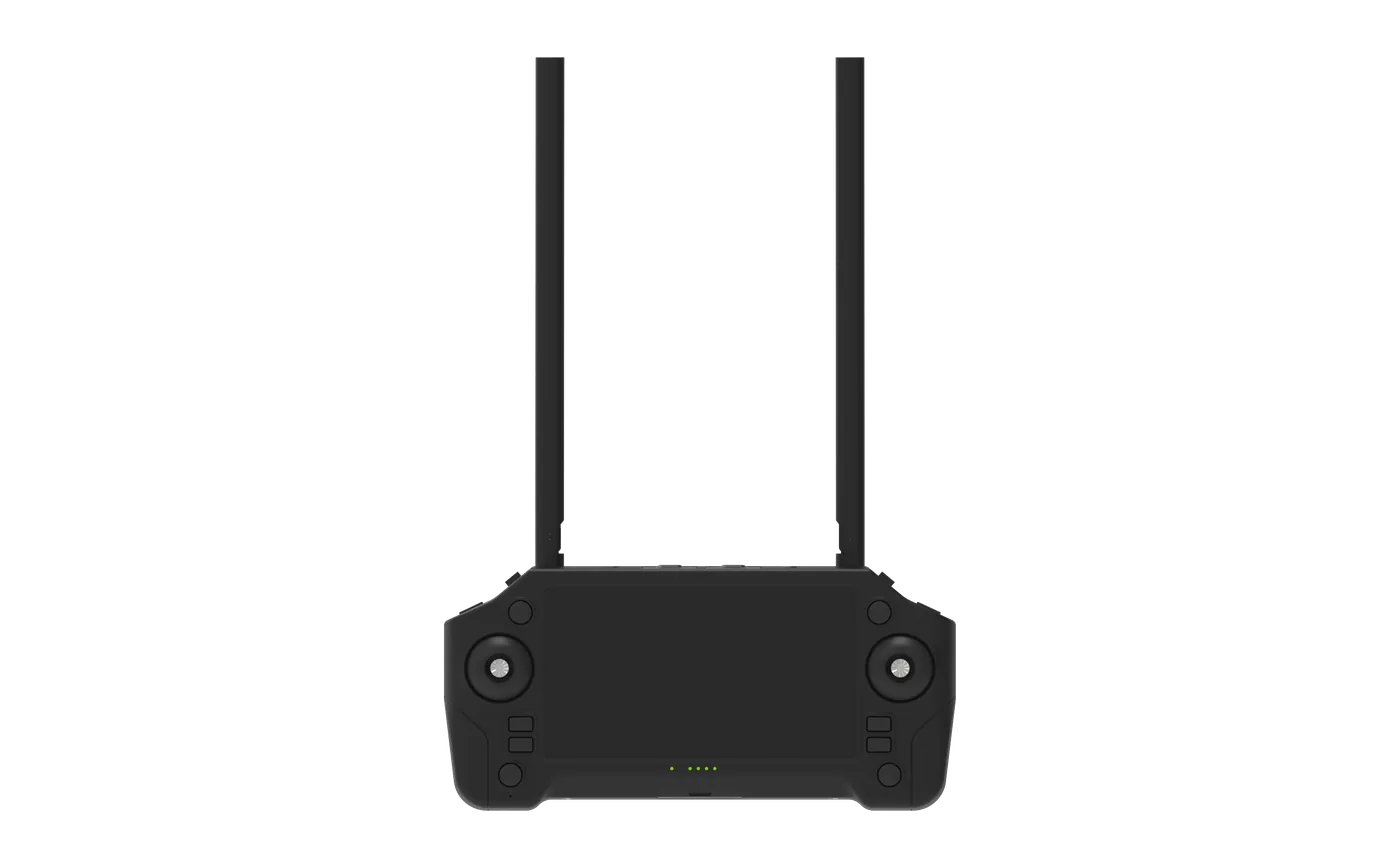
The SG GCS (Ground Control System) is architected specifically for this requirement.
The Heterogeneous Challenge
Coordinating multiple unmanned platforms of different types introduces challenges that single-platform GCS architectures cannot address:
1. Protocol Heterogeneity
Different platforms use different communication protocols, data formats, and command structures. A drone might use MAVLink; a UGV might use ROS (Robot Operating System); a robotic platform might use a proprietary protocol. A heterogeneous GCS must translate between these protocols in real time without introducing latency or data loss.
2. Situational Awareness Integration
Each platform generates its own sensor data — video, LiDAR, GPS position, status telemetry. A heterogeneous GCS must fuse this data into a single, coherent operational picture that the operator can interpret without cognitive overload.
3. Mission Deconfliction
When multiple platforms are operating in the same area, their flight paths, ground routes, and engagement zones must be deconflicted to prevent collisions and fratricide. This requires real-time spatial awareness across all platforms simultaneously.
4. Bandwidth Management
Multiple HD video streams from multiple platforms can quickly saturate available bandwidth. A heterogeneous GCS must intelligently prioritize data transmission based on mission criticality and available bandwidth.
The SG GCS Architecture
The SG GCS is built on a "command software framework + plugin extension" architecture. The core framework provides:
- Unified operational picture integrating all platform sensor data
- Protocol translation layer for heterogeneous platform communication
- Mission planning and deconfliction engine
- AI-assisted target allocation and task distribution
Plugin modules extend this core with platform-specific capabilities:
- UAV Plugin: Full control of all Star United Flight Control UAV platforms (FL-Series + VTOL)
- UGV Plugin: Unmanned ground vehicle coordination
- Robotic Platform Plugin: Integration with robotic dogs and other ground robots
- Third-Party Plugin: Standard interfaces for non-SG platforms
This architecture means that adding a new platform type requires only a new plugin — not a redesign of the core system. As the unmanned systems ecosystem evolves, the SG GCS evolves with it.
The Four-Module Operational Loop
The SG GCS implements the complete Sense → Plan → Strike → Assess operational loop:
Module 1: Intelligent Mission Planning
Two-level planning architecture:
- Airborne level: Each platform plans its own optimal path within assigned parameters
- Command level: The GCS decomposes high-level objectives into platform-specific tasks
The AI planning engine considers terrain, threat positions, platform capabilities, and fuel/battery status to generate optimal mission plans. Operators can review, modify, and approve plans before execution — maintaining human control while reducing planning burden.
Module 2: Denied-Environment Navigation
Modern contested environments routinely include GPS jamming and communication disruption. The SG GCS maintains operational capability through:
- Multi-source navigation fusion: Inertial navigation + visual odometry + terrain matching
- Redundant communication paths: Multiple frequency bands, mesh networking
- Pre-designated denied zones: Platforms automatically route around known jamming areas
- Autonomous mission completion: Platforms execute pre-loaded missions if communication is lost
Module 3: Strike Coordination
For platforms with kinetic payloads (FL-Series loitering munitions), the GCS provides:
- Warhead-flight control linkage: Real-time integration of fuze logic with flight control
- Attack angle optimization: AI calculates optimal approach angle for maximum effectiveness
- Target deconfliction: Prevents multiple platforms from engaging the same target
- Abort authority: Operator can abort any engagement up to the moment of impact
Module 4: Battle Damage Assessment
Post-engagement assessment is integrated into the operational loop:
- Real-time video recording: All engagement video stored for post-mission analysis
- AI damage assessment: Automated analysis of post-strike imagery
- Re-engagement recommendation: System identifies targets requiring follow-up engagement
- Mission reporting: Automated generation of after-action reports
Case Study: Multi-Domain Operation
Consider a typical multi-domain operation using the SG GCS:
Phase 1 — Reconnaissance: Two 30kg-class VTOL platforms conduct area surveillance, feeding real-time EO/IR imagery to the GCS operational picture. Phase 2 — Target Identification: The GCS AI identifies and classifies targets (vehicles, personnel, fortifications) from the surveillance imagery. Phase 3 — Ground Approach: Two UGVs are tasked to approach the target area under cover, providing ground-level reconnaissance that complements the aerial picture. Phase 4 — Strike Coordination: Six FL950 swarm drones are launched, with the GCS AI allocating specific targets to each unit based on priority and approach geometry. Phase 5 — Assessment: Post-strike imagery from the surveillance platforms is automatically analyzed for battle damage assessment.All five phases are managed from a single GCS terminal by a two-person team — a capability that previously required multiple specialized operators and separate command systems.
Implications for Force Structure
The SG GCS's heterogeneous coordination capability has profound implications for force structure. When a single terminal can coordinate drones, ground vehicles, and robotic platforms simultaneously, the traditional distinction between air, ground, and robotic elements becomes operationally irrelevant. Small units gain the coordination capability previously available only to battalion-level headquarters.
This force multiplication effect — enabling small teams to coordinate complex multi-domain operations — represents the most significant tactical innovation enabled by next-generation ground control systems.
Contact the our systems engineering team to discuss GCS integration with your existing unmanned systems infrastructure.