
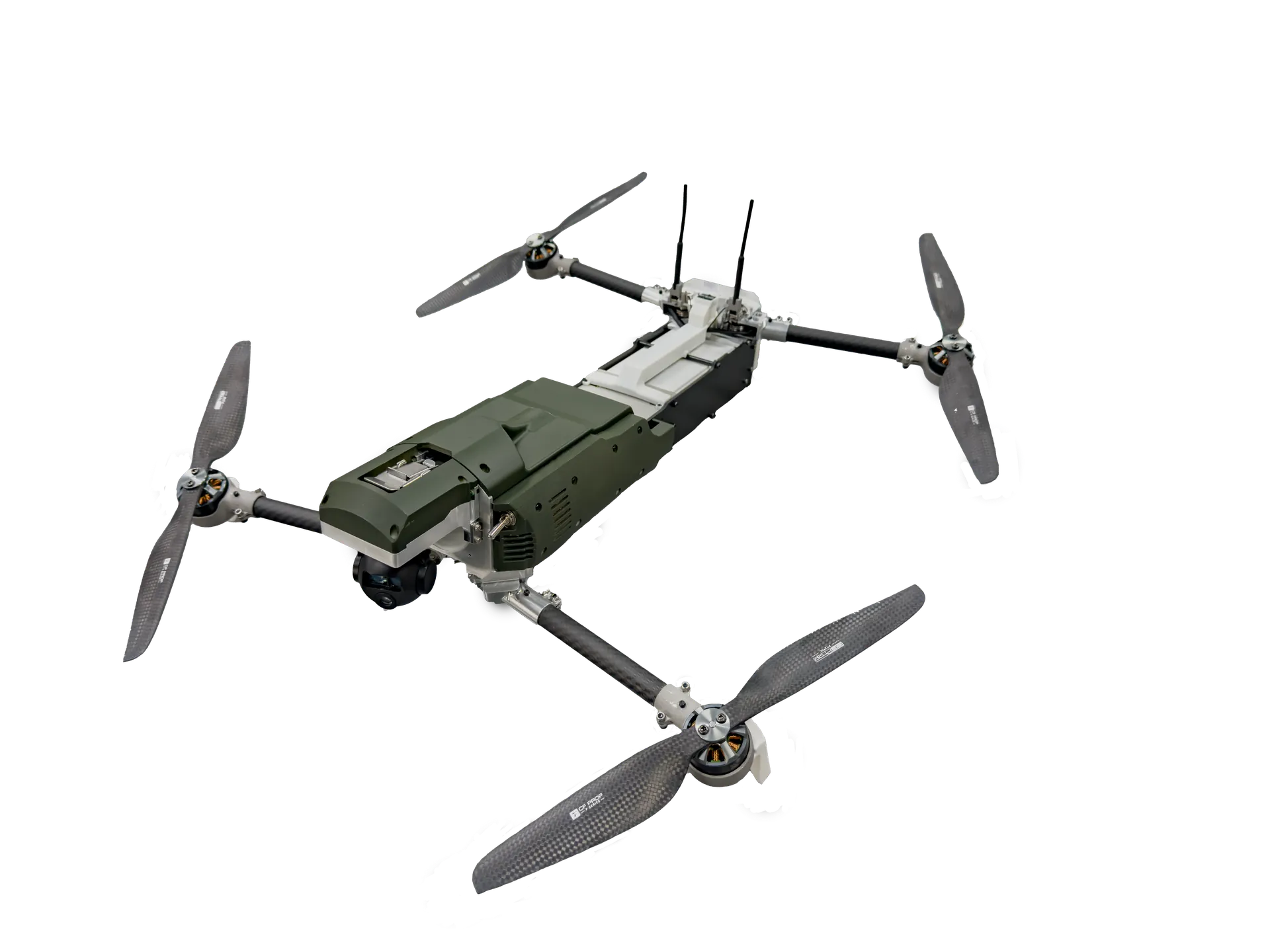
Loitering Munition Total Cost of Ownership: Beyond the Unit Price
Unit price is only one part of lifecycle cost. This guide organizes training, spare parts, maintenance, consumables and support into a practical procurement planning framework.
The Hidden Costs of Loitering Munition Procurement
Lifecycle budgeting should account for training, spares, maintenance, consumables and support alongside the initial system price.
The unit price of a loitering munition system is visible and easy to compare between suppliers. The costs that follow — training, spare parts, maintenance, consumables, and support — are less visible, harder to compare, and collectively often exceed the initial procurement cost over a 5-year operational period.
This guide provides a complete TCO framework for loitering munition procurement planning.
TCO Component 1: Initial Procurement (Year 0)
System Hardware
- Drone units: Per-unit price × quantity
- Launch system: Box-fire terminal, launch tubes, or vehicle integration hardware
- Ground Control Station (GCS): Per-station price × quantity
- Spare parts initial stock: Typically 15–20% of hardware cost
- Accessories: Carrying cases, battery chargers, field maintenance tools
Integration & Delivery
- Shipping and customs: 3–8% of hardware cost depending on destination country
- Export licensing fees: Variable; budget $5,000–$20,000 for complex export authorizations
- In-country delivery and installation: Variable
TCO Component 2: Training (Year 0–1)
Training is the most consistently underestimated cost in loitering munition procurement.
Initial Training Costs
- Operator training (per operator): $800–$1,500 for manufacturer facility training; $1,200–$2,000 for in-country training
- Maintenance technician training: $500–$800 per technician
- Train-the-Trainer program: $3,000–$5,000 per instructor candidate
- Travel and accommodation (for manufacturer facility training): Variable
Ongoing Training Costs (Annual)
- Refresher training: $300–$500 per operator per year
- Replacement operator training: Budget for 20–30% annual operator turnover in active units
- New variant/upgrade training: $200–$400 per operator when new software or hardware variants are introduced
TCO Component 3: Spare Parts & Consumables (Annual)
Consumable Components
Loitering munitions are single-use weapons — the drone itself is consumed on each mission. Budget for:
- Drone unit replenishment: Per-mission cost × projected annual missions
- Warhead replenishment: Included in drone unit cost for most systems
Reusable System Components (Wear Parts)
- Battery replacement: Lithium polymer batteries typically require replacement every 200–300 charge cycles; budget for annual replacement
- Propeller replacement: Typically $50–$150 per set; replace every 50–100 flight hours
- Gimbal and camera maintenance: Annual inspection and calibration; $200–$500 per unit
- Launch system maintenance: Annual inspection of launch tubes, pneumatic systems, and electronics
Spare Parts Stock
- Recommended stock level: 20% of fleet size in critical spare parts
- Annual replenishment: Budget 8–12% of hardware cost annually for spare parts
TCO Component 4: Maintenance (Annual)
Scheduled Maintenance
- 100-hour inspection: Airframe, avionics, and propulsion system inspection
- Annual overhaul: Full system inspection, calibration, and software update
- GCS software updates: Annual subscription or per-update fee
Unscheduled Maintenance
- Crash damage repair: Budget for 2–3 incidents per 100 flight hours in training environments
- Component failure replacement: Budget 5–8% of hardware cost annually
Maintenance Labor
- In-house maintenance: If using trained in-house technicians, budget for labor time
- Manufacturer support contracts: Annual support contracts typically cost 8–15% of hardware cost and cover scheduled maintenance, software updates, and priority spare parts
TCO Component 5: Support & Warranty (Annual)
Warranty Period (Year 0–1)
- Standard warranty: 12 months from delivery
- Covers: Manufacturing defects, component failures under normal use
- Excludes: Crash damage, operator error, consumable components
Post-Warranty Support Options
- Basic support: Email/phone technical support; spare parts at standard pricing
- Standard support contract: 8–12% of hardware cost annually; includes priority spare parts, software updates, and 48-hour response SLA
- Premium support contract: 12–18% of hardware cost annually; includes on-site support visits, 24-hour response SLA, and dedicated account manager
5-Year TCO Example
The following example illustrates a typical 5-year TCO for a 50-unit FL750 procurement:
| Cost Component | Year 0 | Year 1–5 (Annual) | 5-Year Total |
|---|---|---|---|
| Hardware (50 units + GCS) | $XXX,XXX | — | $XXX,XXX |
| Spare parts (initial) | $XX,XXX | $XX,XXX | $XX,XXX |
| Training (initial) | $XX,XXX | $X,XXX | $XX,XXX |
| Consumables (drone replenishment) | — | $XX,XXX | $XX,XXX |
| Maintenance & support | — | $XX,XXX | $XX,XXX |
| Total | $XXX,XXX | $XX,XXX | $XXX,XXX |
*Note: Specific pricing is provided under NDA. Contact us for a detailed TCO analysis for your specific procurement requirements.*
TCO Reduction Strategies
1. Train-the-Trainer programs: Investing in ToT in Year 0 significantly reduces ongoing training costs by enabling in-house training capability. 2. Preventive maintenance contracts: Annual support contracts typically reduce total maintenance costs by 20–30% compared to ad-hoc repair. 3. Consolidated spare parts orders: Ordering spare parts in bulk (6–12 month supply) typically reduces unit cost by 10–15%. 4. Operator retention: Reducing operator turnover from 30% to 15% annually can save $15,000–$25,000 per year in replacement training costs for a 50-unit fleet.Contact the Star United Flight Control procurement advisory team for a customized TCO analysis for your specific system configuration, operational tempo, and support requirements.