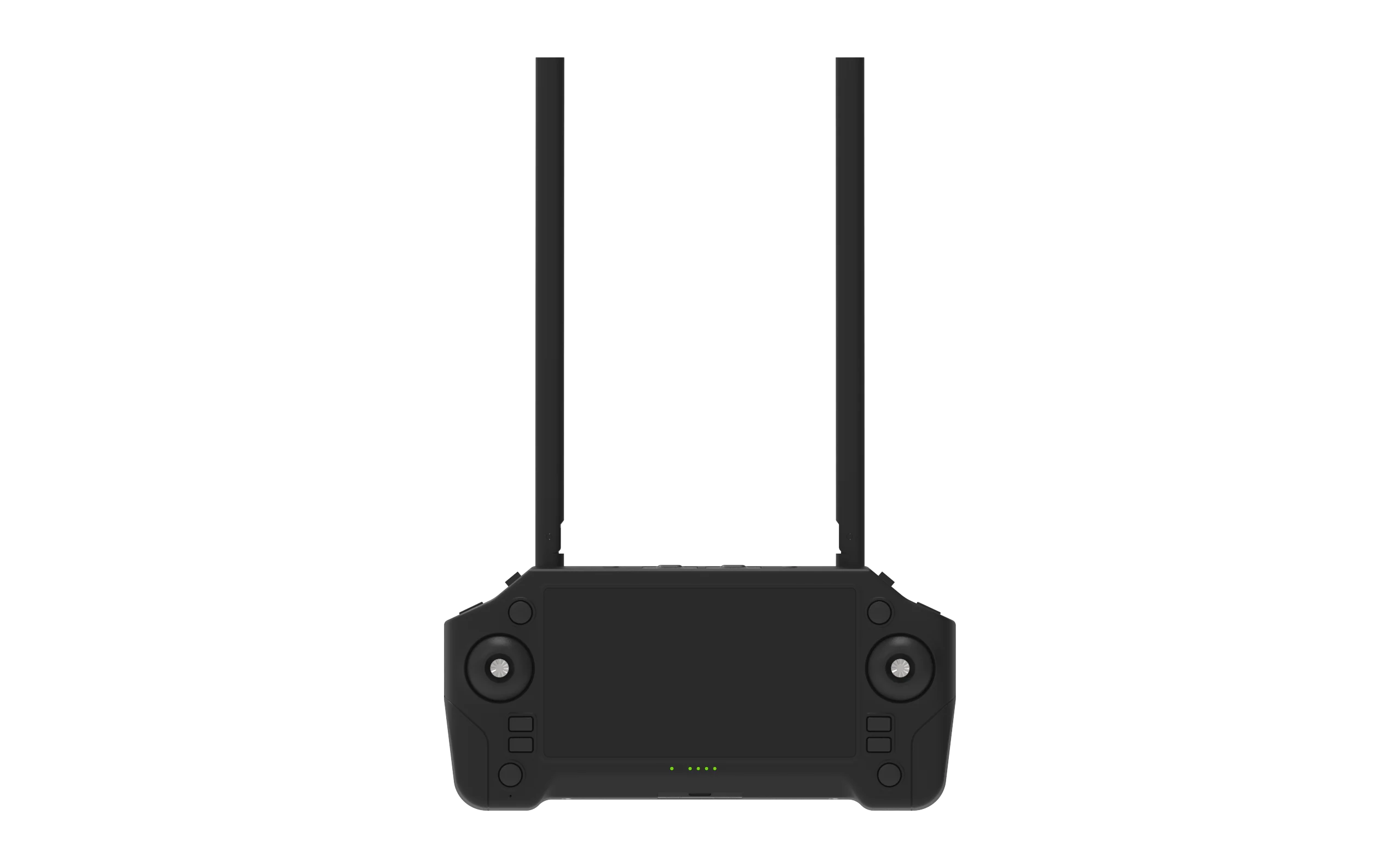
Military UAV Procurement Guide: What Defense Agencies Need to Know in 2025
Procuring military UAV systems involves navigating complex technical specifications, certification requirements, and operational validation processes. This guide provides defense procurement officers with a structured framework for evaluating and selecting unmanned aerial systems.
Introduction: The Complexity of Military UAV Procurement
The global military UAV market is projected to reach $47 billion by 2025, with loitering munitions alone representing a $5.4 billion segment growing at 20.6% CAGR. For defense procurement officers, this growth means an expanding — and increasingly complex — landscape of vendors, platforms, and capability claims.
This guide provides a structured framework for evaluating military UAV systems, with particular focus on the technical, operational, and compliance dimensions that distinguish capable, battle-proven systems from marketing-driven proposals.
Phase 1: Requirements Definition
Before engaging vendors, procurement teams must define requirements across four dimensions:
1.1 Mission Profile Matrix
| Mission Type | Key Parameters |
|---|---|
| Precision Strike | CEP accuracy, warhead compatibility, terminal speed |
| ISR / Reconnaissance | Endurance, sensor payload, data link range |
| Swarm Operations | Node count, coordination architecture, operator ratio |
| Logistics / Delivery | Payload capacity, range, VTOL capability |
| Border Security | Endurance, coverage area, autonomous patrol |
1.2 Operational Environment
- Altitude: Sea level to 4,500m+ (high-altitude plateau operations)
- Climate: Tropical, arctic, desert, maritime
- Electronic Warfare: GPS-denied, communication-jammed environments
- Terrain: Urban, mountainous, open desert, maritime
1.3 Force Structure Integration
- Echelon level: Individual soldier, squad, platoon, company, battalion
- Existing C2 systems and interoperability requirements
- Logistics and maintenance infrastructure
- Operator training capacity
Phase 2: Technical Evaluation Criteria
2.1 Performance Specifications
When evaluating manufacturer specifications, procurement officers should require independently verified test data rather than relying solely on manufacturer claims. Key parameters to verify:
For Loitering Munitions:- CEP accuracy under operational conditions (not laboratory conditions)
- Endurance at operational payload weight (not empty weight)
- Terminal speed and warhead effectiveness data
- Communication range in contested RF environments
- Endurance at stated payload weight and operational altitude
- VTOL takeoff performance at maximum operational altitude
- Data link performance at stated range
- Payload bay volume and CG characteristics
- Maximum simultaneous platform coordination
- Latency in command-response loop
- Performance in GPS/communication-denied environments
- Integration capability with existing C2 infrastructure
2.2 Reliability and Durability
Military UAV systems operate in environments that would destroy commercial-grade equipment. Procurement specifications should require:
- MTBF (Mean Time Between Failures): Minimum 50–100 flight hours for tactical systems
- Environmental testing: MIL-STD-810 or equivalent (temperature, humidity, vibration, shock)
- Storage life: Minimum 2 years in field storage conditions
- Maintenance interval: Expressed in flight hours, not calendar time
2.3 Cybersecurity and Anti-Tamper
Modern UAV systems are high-value intelligence targets. Procurement requirements should address:
- Encrypted data links (minimum AES-256 for command/control)
- Anti-spoofing GPS protection
- Secure boot and firmware integrity verification
- Anti-tamper provisions for sensitive components
Phase 3: Manufacturer Qualification
3.1 Quality Management Certification
For defense procurement, quality management certification is non-negotiable. The relevant standards include:
- AS9100: Aerospace quality management, internationally recognized
- ISO 9001: Industry baseline for quality management systems
- MIL-STD-810: Environmental engineering and laboratory tests for military equipment
Star United Flight Control (Shaanxi) Technology Co., Ltd. operates under an ISO 9001-compliant quality management system with MIL-STD-810 environmental qualification capability, covering design, development, production, and delivery of defense equipment.
3.2 Intellectual Property and Supply Chain
Procurement officers should verify:
- Ownership of core technology (not licensed from third parties)
- Domestic manufacturing capability for critical components
- Supply chain resilience for long-term support
- Export control compliance for international procurement
Star United Flight Control holds core invention patents covering autonomous aerodynamics, flight control systems, and swarm coordination algorithms — ensuring independent technology ownership and long-term supply chain security.
3.3 Operational Track Record
Request documented evidence of:
- Operational deployments (with appropriate security classification)
- Field test results from independent evaluation
- Customer references from comparable defense agencies
- After-sales support and maintenance track record
Phase 4: Operational Testing and Evaluation
4.1 Acceptance Testing Protocol
Before final procurement decision, conduct structured operational testing:
Scenario 1: Baseline Performance- Verify manufacturer specifications under controlled conditions
- Document any deviations from stated performance
- Test at maximum operational altitude
- Test in high-wind conditions (Level 5–6 Beaufort)
- Test in GPS-denied environment (if applicable)
- Measure time to operator competency from zero experience
- Evaluate human factors: controller ergonomics, display clarity, fatigue
- Test maintenance procedures with organic maintenance personnel
- Verify compatibility with existing C2 systems
- Test data link interoperability with other platforms
- Evaluate GCS integration with existing operational picture
4.2 Total Cost of Ownership
Procurement cost is only one component of total system cost. Evaluate:
| Cost Component | Typical Range |
|---|---|
| Platform acquisition | 40–60% of TCO |
| Training and certification | 5–15% |
| Spare parts and maintenance | 15–25% |
| Consumables (batteries, warheads) | 10–20% |
| Software updates and support | 5–10% |
Phase 5: Key Questions for UAV Manufacturers
When engaging manufacturers, these questions separate capable suppliers from marketing-driven vendors:
- "What is your CEP accuracy under operational conditions, not laboratory conditions?"
- "What is your endurance at stated payload weight and maximum operational altitude?"
- "How does your system perform in a GPS-denied, communication-jammed environment?"
- "What quality management certification do you hold, and can we audit your facility?"
- "Who owns the core IP, and what is your supply chain for critical components?"
- "What is your MTBF data from operational deployments?"
- "What is your after-sales support model, and what is your parts availability guarantee?"
Star United Flight Control: Meeting Defense Procurement Standards
Star United Flight Control (Shaanxi) Technology Co., Ltd. is positioned to meet the full spectrum of defense procurement requirements:
- ISO 9001 Quality Management Certified — International quality management standard
- National High-Tech Enterprise — Government-verified technology capability
- Core Invention Patents — Independent IP ownership across all product lines
- End-to-End R&D — Aerodynamics, flight control, AI systems, manufacturing
- Full Product Line — From 550g soldier-portable to 150kg heavy-lift platforms
Contact our government relations team to initiate the procurement process or arrange a technical evaluation.