
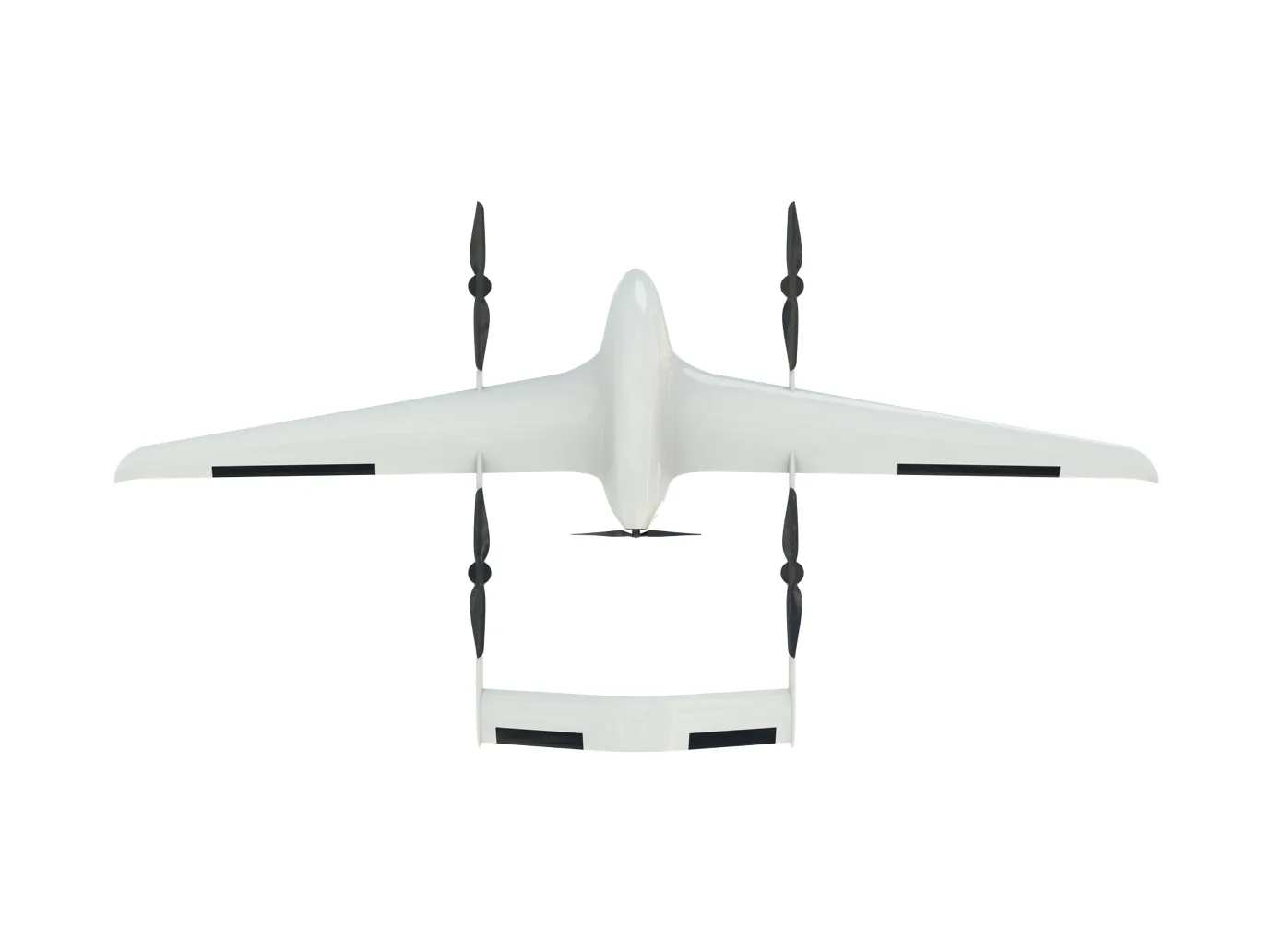
VTOL UAV vs. Helicopter for ISR Missions: A Cost and Operational Effectiveness Comparison
Defense and government agencies operating manned helicopter fleets for ISR missions face a fundamental question: at what point does transitioning to VTOL UAV platforms deliver superior operational value? This analysis examines the economics and operational trade-offs across acquisition cost, operating cost, endurance, and mission effectiveness.
The Helicopter Legacy in ISR Operations
For decades, the helicopter has been the primary platform for airborne ISR in defense and government operations. Its ability to hover, operate from unprepared surfaces, and carry substantial sensor payloads made it the default choice for surveillance, border patrol, and reconnaissance missions. But the emergence of long-endurance VTOL fixed-wing UAVs has fundamentally changed the cost-effectiveness calculus for many ISR mission profiles.
This analysis compares VTOL UAV platforms against light-to-medium ISR helicopters across the dimensions that matter most to procurement officers and operational commanders.
Acquisition Cost Comparison
The acquisition cost differential between VTOL UAVs and helicopters is substantial:
| Platform Type | Acquisition Cost Range | Notes |
|---|---|---|
| Light ISR helicopter (e.g., Bell 407) | $2.5M – $4.5M | Without mission systems |
| Medium ISR helicopter (e.g., AW139) | $12M – $18M | Without mission systems |
| ISR sensor suite (EO/IR + SAR) | $1.5M – $4M | Additional to airframe |
| SG 30kg-class VTOL UAV | $150K – $350K | With EO/IR payload |
| SG 150kg-class VTOL UAV | $400K – $800K | With multi-sensor payload |
At acquisition cost alone, a single medium ISR helicopter represents the equivalent of 20–40 VTOL UAV systems. This is not a marginal difference — it represents a fundamentally different force structure option.
Operating Cost Per Flight Hour
Acquisition cost is only part of the total cost of ownership. Operating costs — fuel, maintenance, crew, and support — often exceed acquisition cost over a platform's service life.
| Cost Category | Light ISR Helicopter | SG 30kg-Class VTOL | SG 150kg-Class VTOL |
|---|---|---|---|
| Fuel cost/hour | $400 – $800 | $15 – $30 | $40 – $80 |
| Maintenance cost/hour | $800 – $1,500 | $50 – $120 | $80 – $180 |
| Crew cost/hour | $200 – $500 (2 crew) | $30 – $80 (1 operator) | $30 – $80 (1 operator) |
| Total operating cost/hour | $1,400 – $2,800 | $95 – $230 | $150 – $340 |
The operating cost differential is even more pronounced than acquisition cost. A light ISR helicopter costs 10–15× more per flight hour than a comparable VTOL UAV system. Over a 1,000-hour annual operating tempo, this translates to $1.2M–$2.6M in additional annual operating costs for the helicopter.
Endurance and Coverage Area
Endurance is the dimension where VTOL UAVs most decisively outperform helicopters:
| Platform | Typical ISR Endurance | Coverage Area (per sortie) |
|---|---|---|
| Light ISR helicopter | 2.5 – 3.5 hours | ~5,000 km² |
| Medium ISR helicopter | 3 – 4.5 hours | ~8,000 km² |
| SG 30kg-class VTOL | 5 – 6 hours | ~12,000 km² |
| SG 150kg-class VTOL | 6 – 7 hours | ~18,000 km² |
The SG 150kg-class platform's 7-hour endurance enables a single platform to maintain persistent coverage of a maritime patrol zone that would require three helicopter sorties to cover — with the associated crew fatigue, refueling logistics, and coverage gaps during transitions.
Operational Capability Comparison
| Capability | ISR Helicopter | VTOL UAV |
|---|---|---|
| Hover capability | Yes | No (fixed-wing cruise) |
| VTOL from unprepared surface | Yes | Yes |
| Runway independence | Yes | Yes |
| Night operations | Yes (with NVG/FLIR) | Yes (with IR payload) |
| All-weather operations | Limited | Limited (EO/IR) / Excellent (SAR) |
| Crew risk | High (combat environment) | Zero |
| Survivability in contested airspace | Low | Moderate (small RCS) |
| Simultaneous multi-platform ops | Limited by crew | Yes (1 operator, multiple UAVs) |
The helicopter retains one significant operational advantage: hover capability. For missions requiring stationary observation — hostage rescue support, precision target marking, or hovering overwatch — the helicopter remains superior. For persistent area surveillance, patrol, and wide-area ISR, the VTOL UAV is operationally superior in most dimensions.
Total Cost of Ownership: 5-Year Analysis
For a representative border security agency operating 2,000 flight hours per year:
Light ISR Helicopter (5-year TCO)- Acquisition: $3.5M
- Operating costs (10,000 hours × $2,100/hr avg): $21M
- Total: ~$24.5M
- Acquisition (3 platforms + spares): $1.2M
- Operating costs (10,000 hours × $160/hr avg): $1.6M
- Total: ~$2.8M
The 5-year TCO advantage of the VTOL UAV fleet is approximately $21.7M — sufficient to fund the entire UAV program multiple times over, or to invest in additional sensor capabilities, operator training, and system redundancy.
When Helicopters Remain the Right Choice
This analysis is not an argument for eliminating helicopters from ISR operations. Helicopters retain decisive advantages in specific mission profiles:
- Hostage rescue and direct action support: Hover capability and troop insertion are irreplaceable
- Medical evacuation: Helicopter MEDEVAC capability has no UAV equivalent
- Maritime search and rescue: Hoist capability requires a manned platform
- Rapid personnel transport: Helicopters move people; UAVs do not
The optimal force structure for most defense and government agencies is a mixed fleet: VTOL UAVs for persistent ISR and patrol missions, with helicopters reserved for missions requiring their unique capabilities.
Contact the Star United Flight Control defense economics team to discuss total cost of ownership analysis for your specific operational requirements and current fleet composition.